
3d applications – self-folding materials

3D printing became a hot item around 2016,  and quite a few 3d printing machines have been sold over the years.  But, at some point it seems that the use for products from these machines has faded away.

Due to the availability of 3D printers and the fact that these printers are getting better and are producing prints with better quality as they evolve over time, more applications have been developed.

In this article I will sum up a couple of these new areas in which 3D printing became a driver for new developments, which are sometimes just scratching the surface of possible future developments.

  1. Dental products.  For over 40 years , dentists are using Services from laboratories to produce Ceramic protheses for teeth.  The base for this is a mould, taken from the patient.  I recall that this was indeed not a very pleasant process for the patient.  This process was time consuming and it required also some adjusting and fine-tuning at delivering the protheses at the right place.   Currently all dentists are either producing the protheses themselves or use online deliveries that are mostly available with a production- and delivery time of less than 4 hours.  the process starts with a 3d-scan from the patient’s mouth, compared with (if available) older pictures and/or X-rays.  All is fed into a normal PC, and the software makes the 3d print data.  After that, printing the protheses is quite simple with the new ceramic printable filaments. Placing the protheses with UV-herdening glue means that someday we will be able to do this at home. Although the prepping of the place to put the protheses will still be done by a dentist, I presume.
  2. Technical parts.  For many tehnological industries the availability of 3D printers has made it possible to have faster development processes of new parts and applications,  You can think of modeling new tools,  household objects, cars and -parts, and so on.  Since new materials can be printed like aluminium, copper, gold, silver and carbon much is possible. After the developments has produced a complete product, mass-production can start and for this, the 3D design files can be handed over to make the work easy.nn In this way both time and money is saved.
  3. Art.  Maybe not the most obvious development yet, but lately I ran into some artists whom actually used 3D printing in most expressive ways, as art may do.  If you check the internet for this, some interstingexamples can be found.
  4. Medical developments.  Since 2017, a new development achieved the ability for 3D printed parts to shrink and expand, based on the printed structure.  Read this article about self-folding materials
  5. Fun printing. Many hobbyists are printing 3D objects just for fun.  To add-on applications to their 3D printer, build new ones or print household applications.


K40 lasercutter

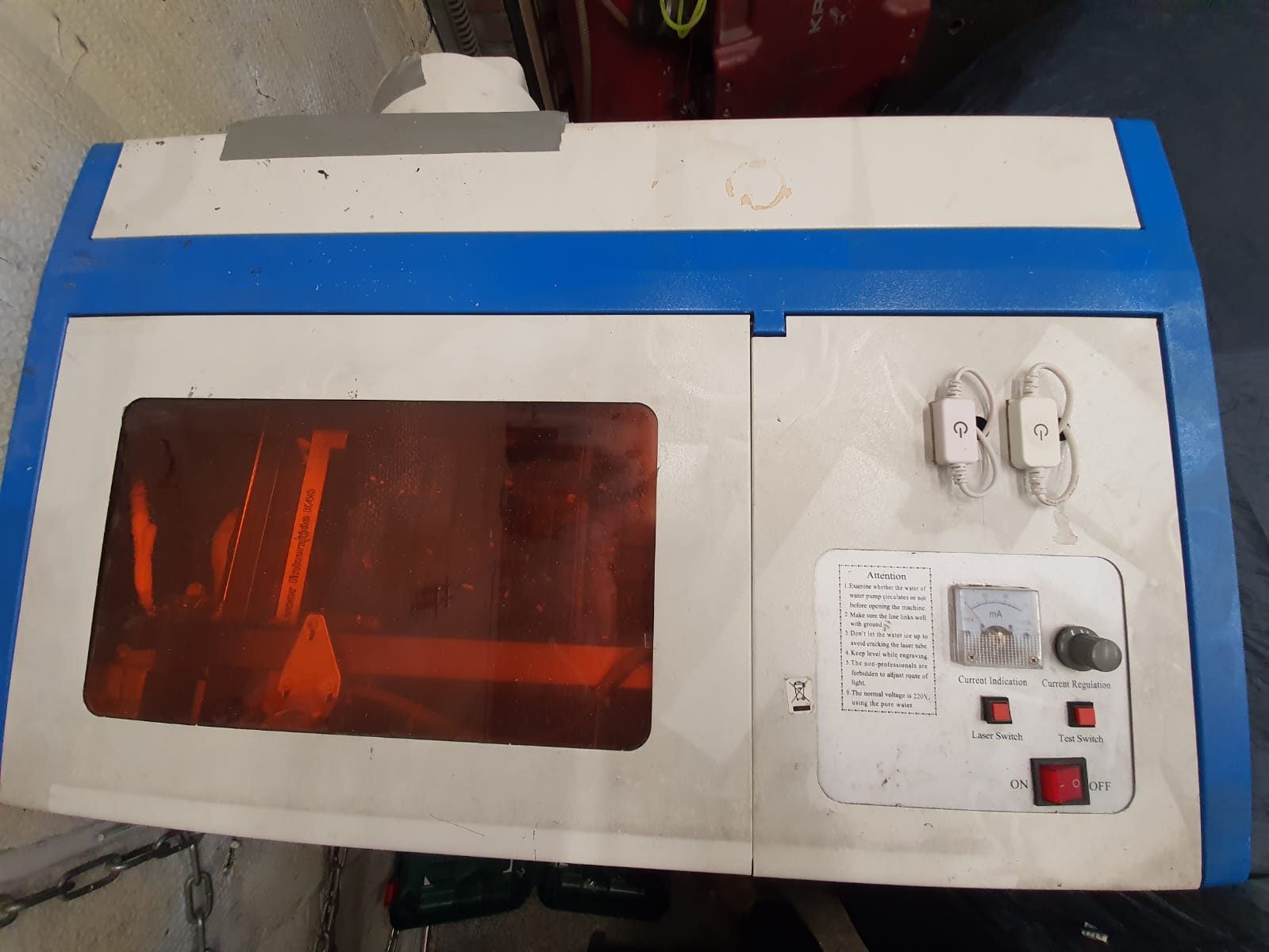
My Chinese lasercutter which I bought back in 2014 has been upgraded over the years.  As many others do, I got the cooling system for the laser tube inside the casing, added some LED lights inside and also added an air pump for the laser head.

All in all the machine works fine now but the relatively small working area remains the bottleneck for using this machine for real interesting projects.

Mid-2020 I used the laser cutter for a couple of projects where I needed series of cut acrylic.  The machine handled this flawlessly, but I did put it outside to prevent any smoke from entering our home.

I do have some ideas about upgrading the machine with a larger workspace and put the electronics and water cooling system in a seperate housing.  No materials are needed for this, except 3 linear rails and some aluminium profiles.  But- (status May-2021)  I will start this project only if there is some work to be done with the machine since it is already working fine as it is, although the workspace is limited.

I use Inkscape (freeware) for making designs in SVG and import these .SVG files in K40whisperer (also freeware) which then  can send the required Gcode to the K40 lasercutter. This all works very well and fast, you don’t need a fast computer for this.  I use a 10 year old dedicated HP laptop for this.

In future use I want to make this lasercutter use the same board as I am using with my big LED laser cutter, so I can use GRBL on both.

As you probably know, a K40 or any other CO2 lasercutter can cut a specific kind of materials while a common LED lasercutter can cut other kind of materials better, due to the used kind of light on both which differ in wavelenghts.

The CO2 cutter can cut acrylic easily and the LED laser cutter can’t.

The LED cutter requires some sort of substance in the to be cut material to work properly.

Be aware that the security goggles you need also are specific for either macine.

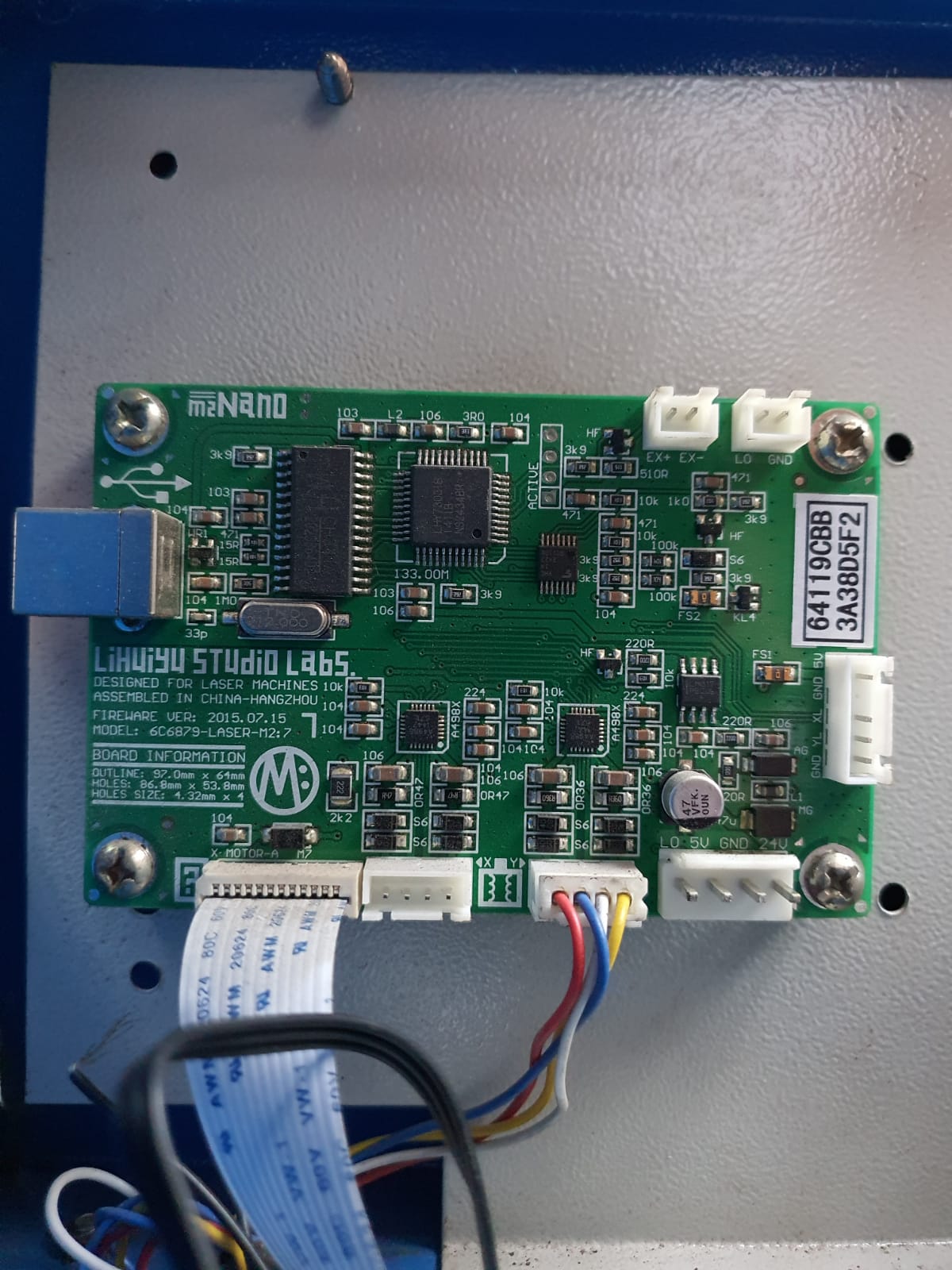
The original driver board of the K40 CO2 lasercutter
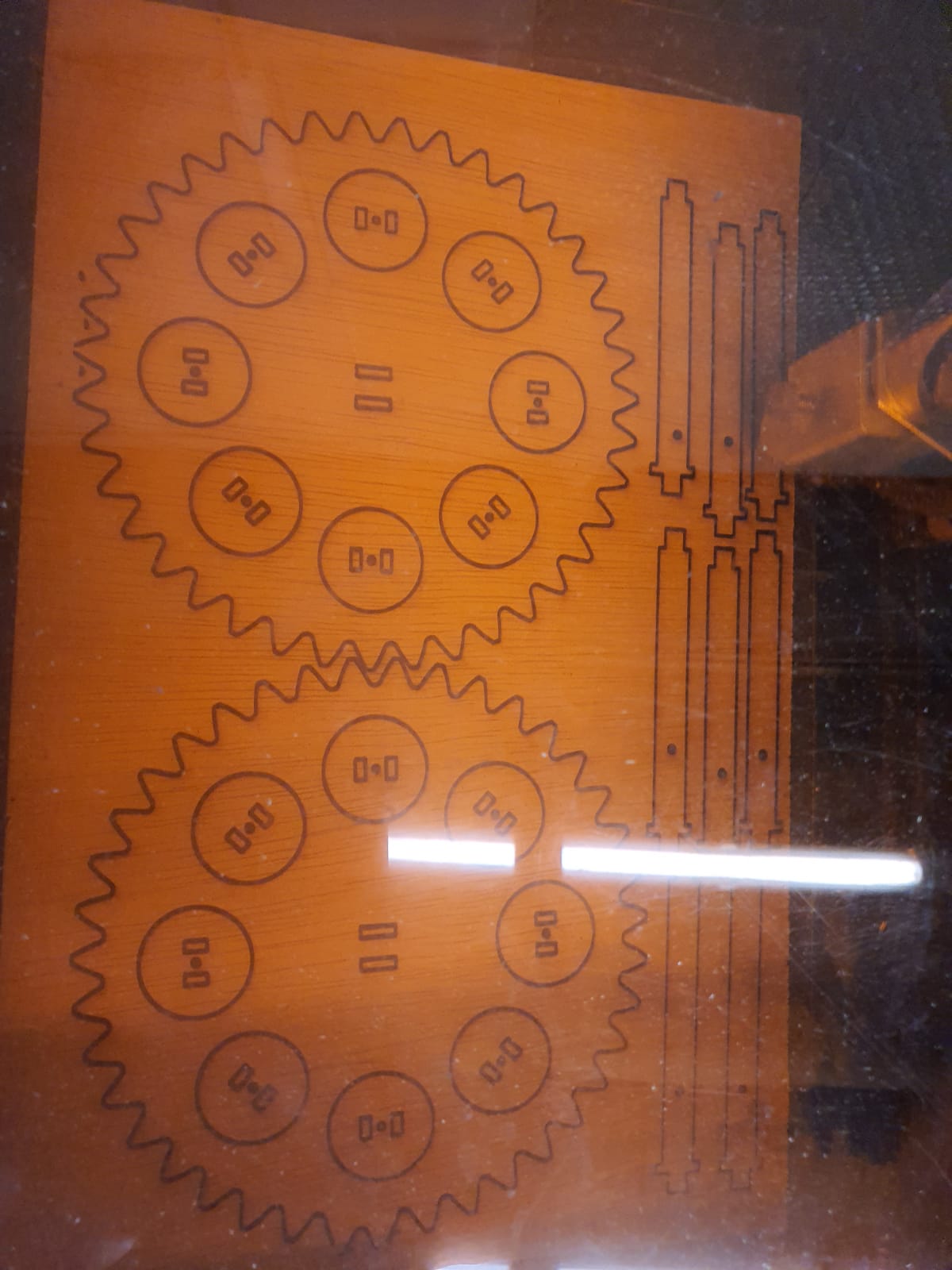
First cut on a piece of tripledeck 4mm multiplex for my clock pieces
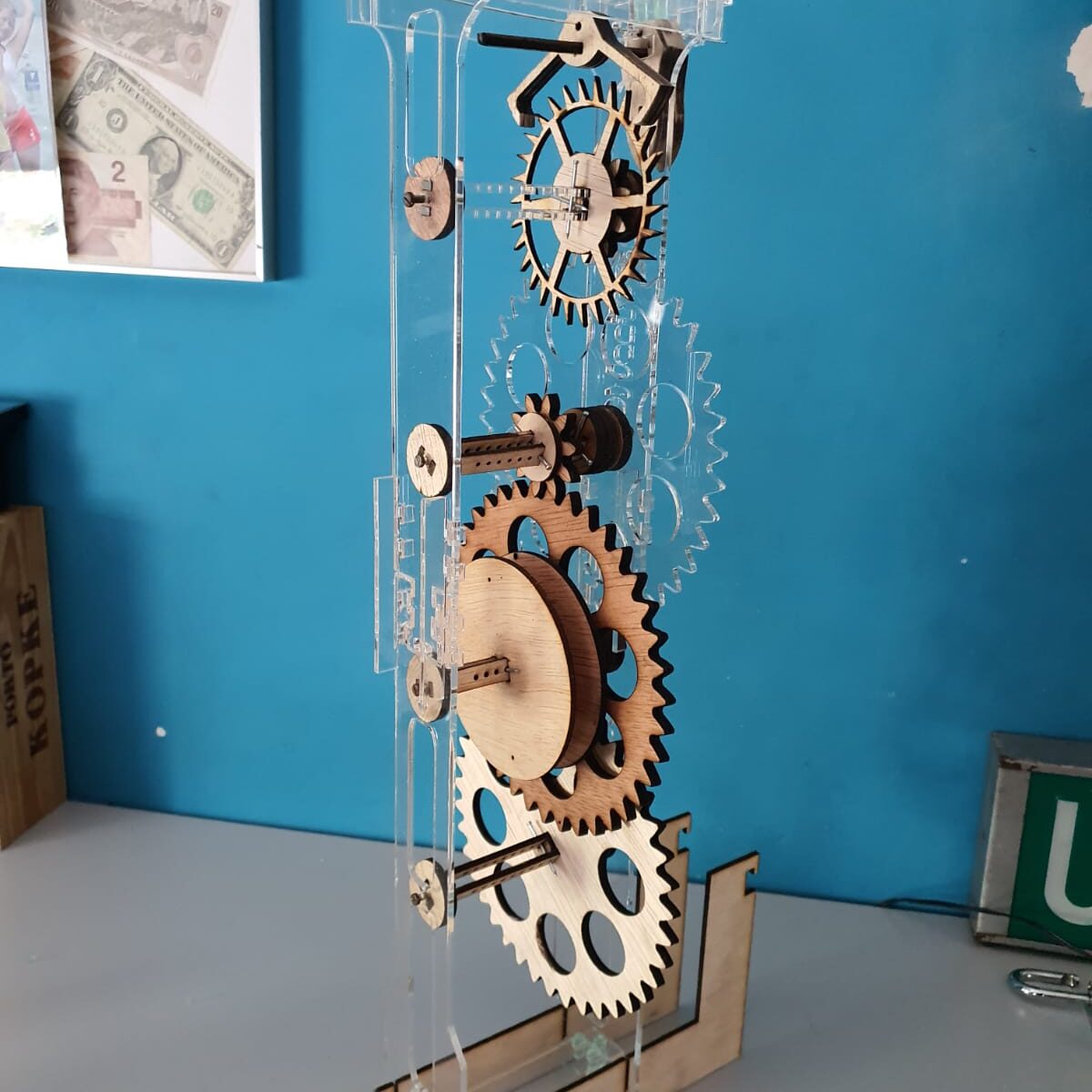
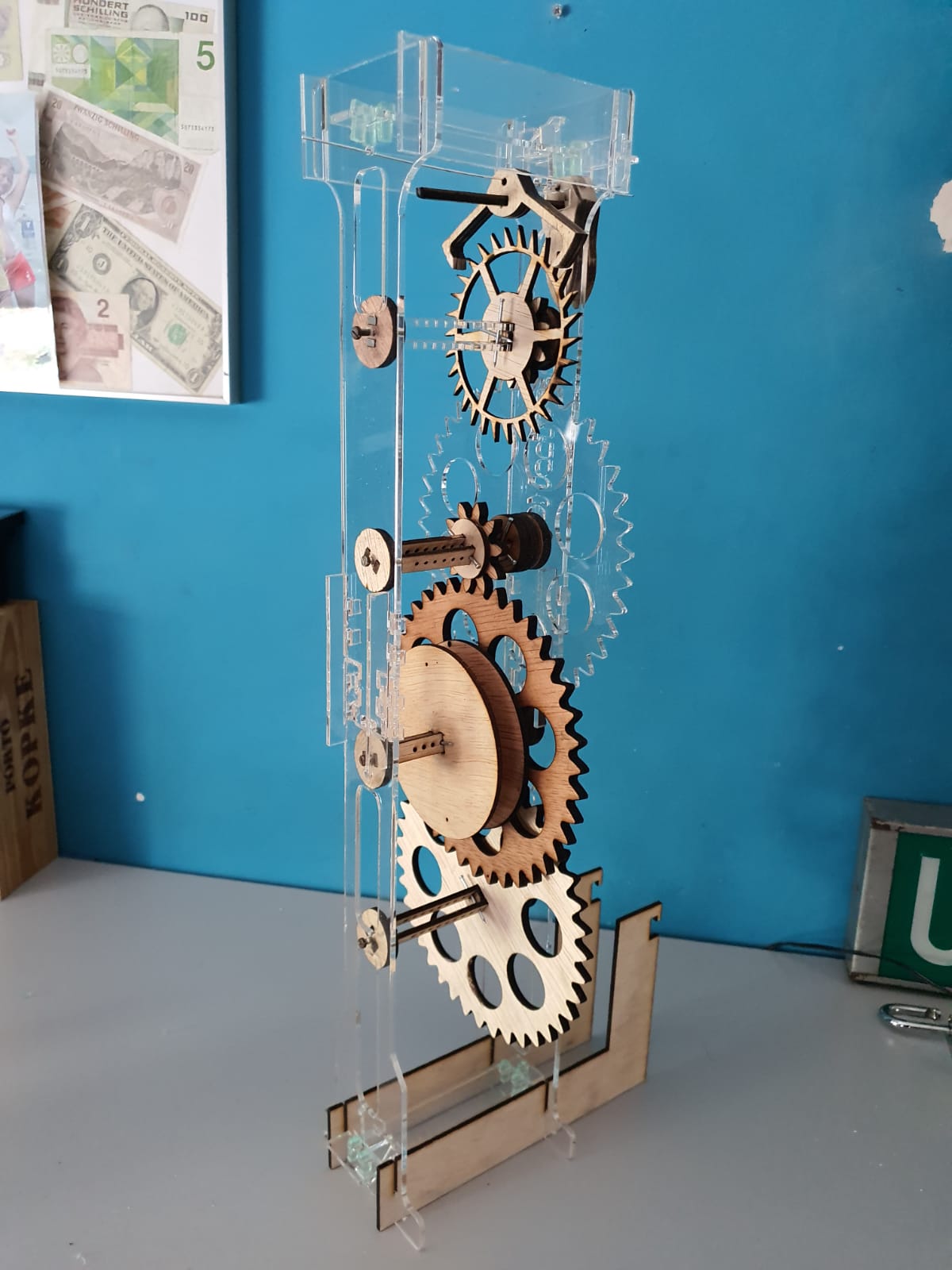
The clock’s interior and stand pieces, wood and acrylic. Both cut on the K40
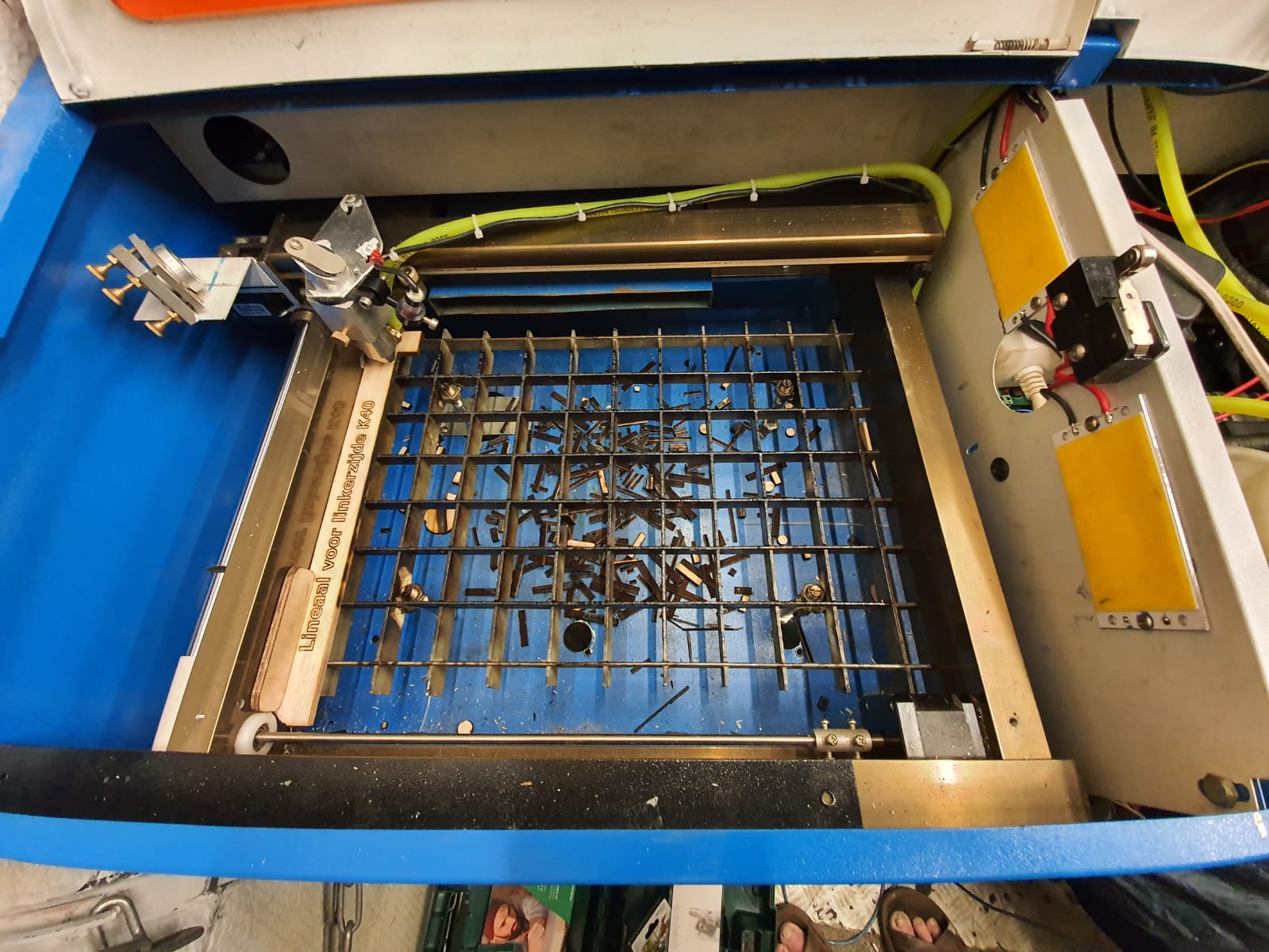
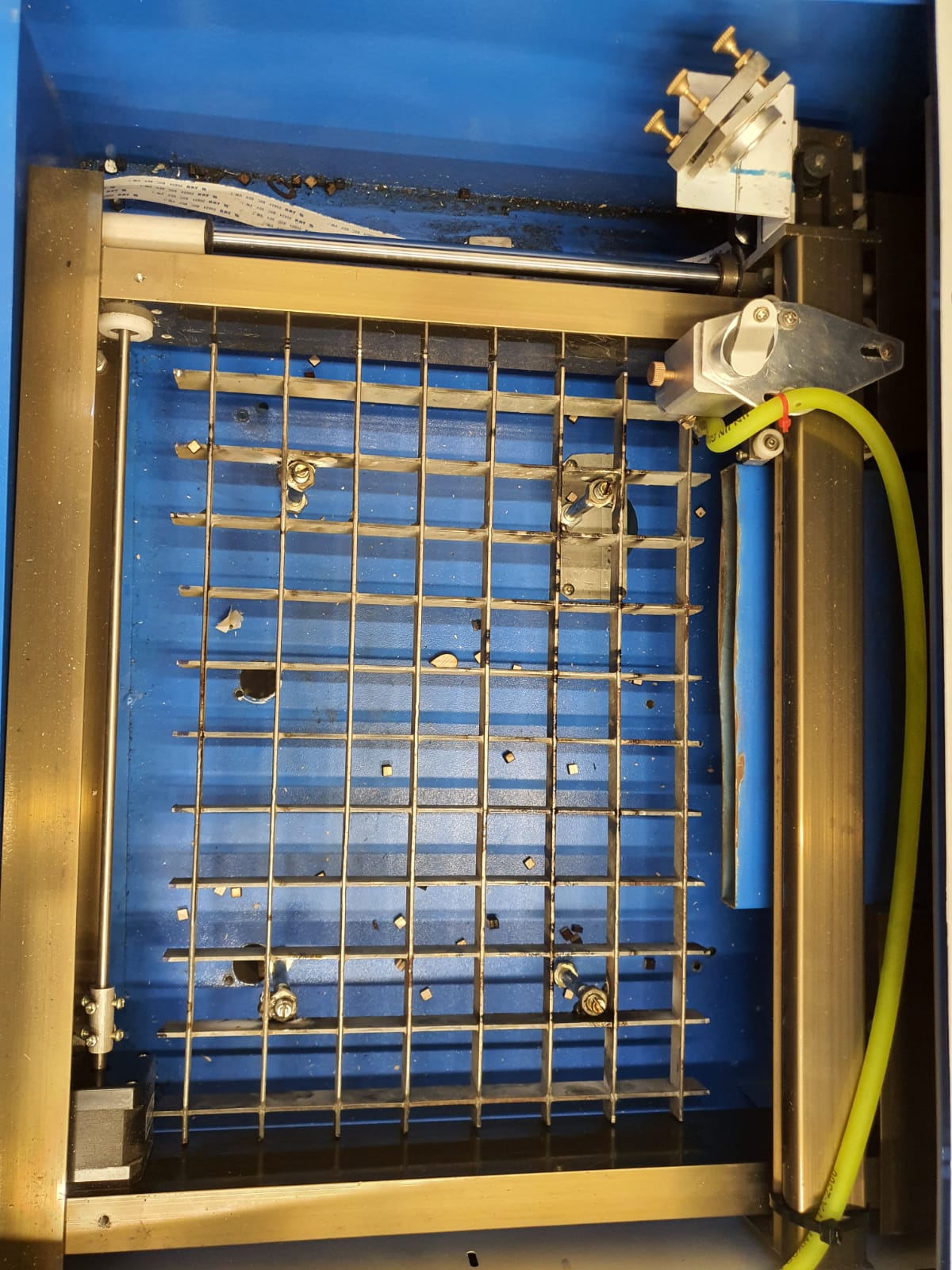
The inside of the K40’s work space with the debree on the bottom. The air hose is green silicon. Also added an emergency cutoff switch for the laser tube. open the hood and the power stops.
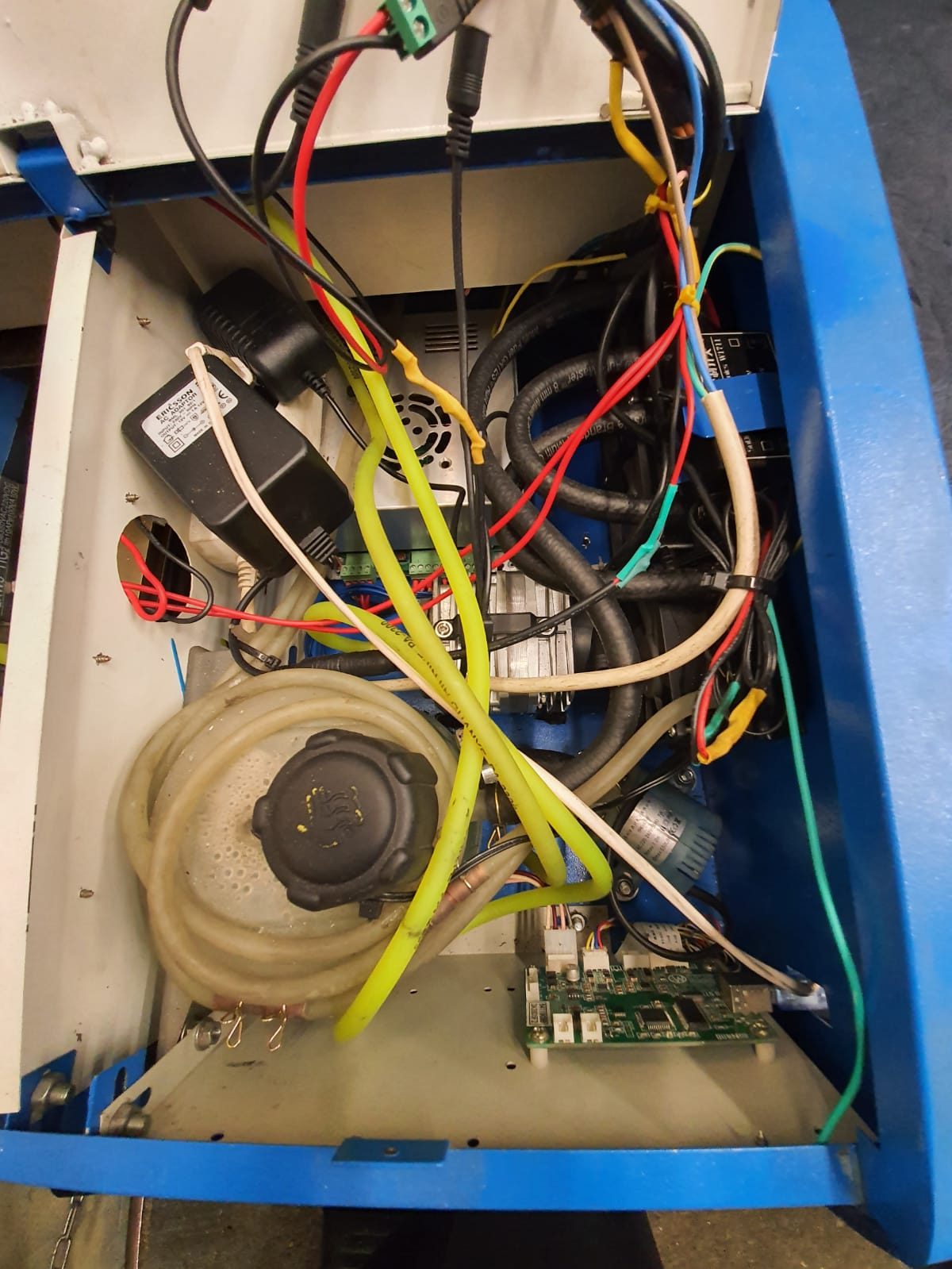
The electronics and water cooling on the Right hand side of the K40’s housing. The air cooled radiators are just out of sight to the most right hand side of the housing, 3 pieces of 40x40mm
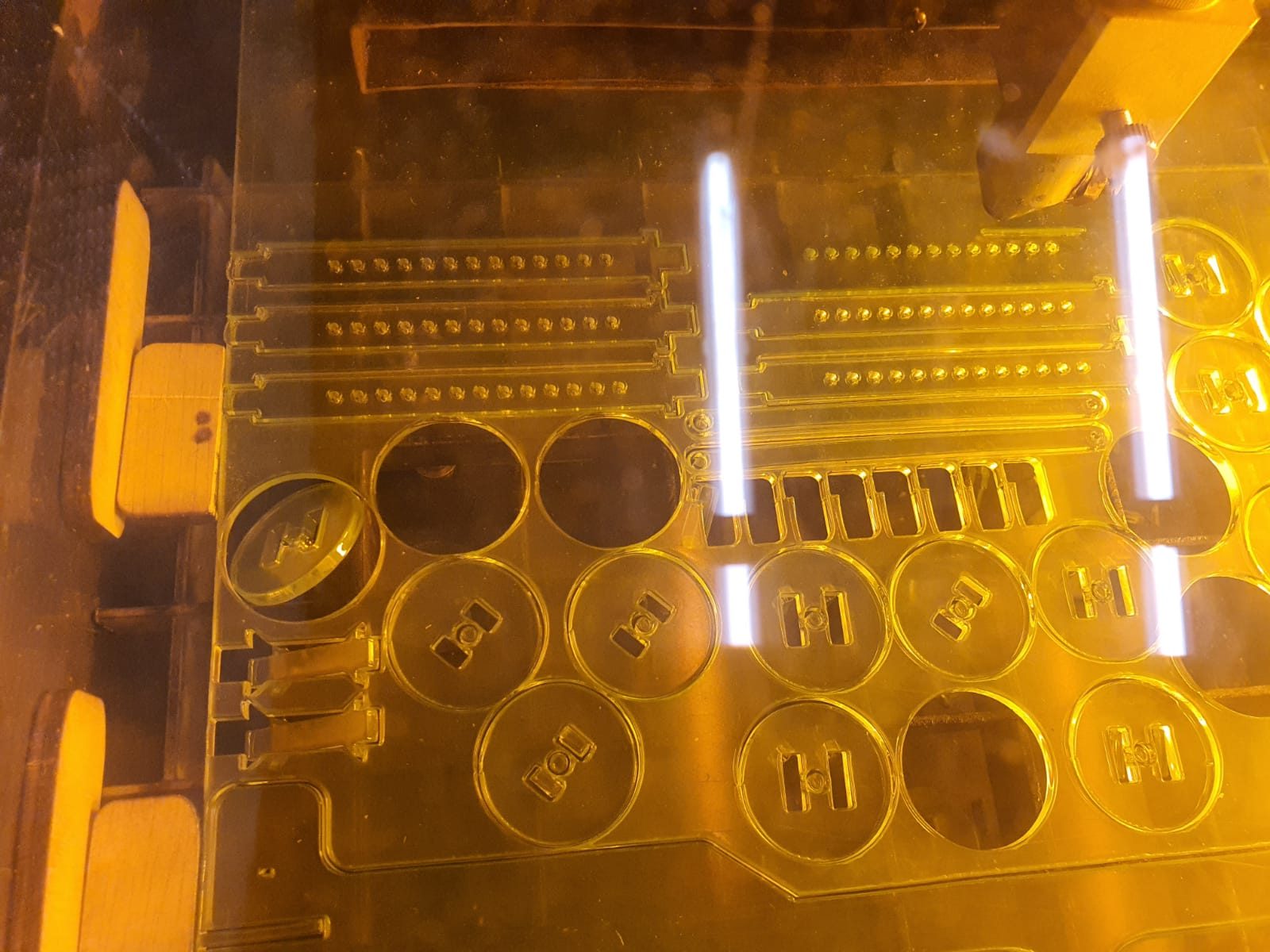
The acrylic cut for the clock, done in 1 time. This is 3 mm thick.
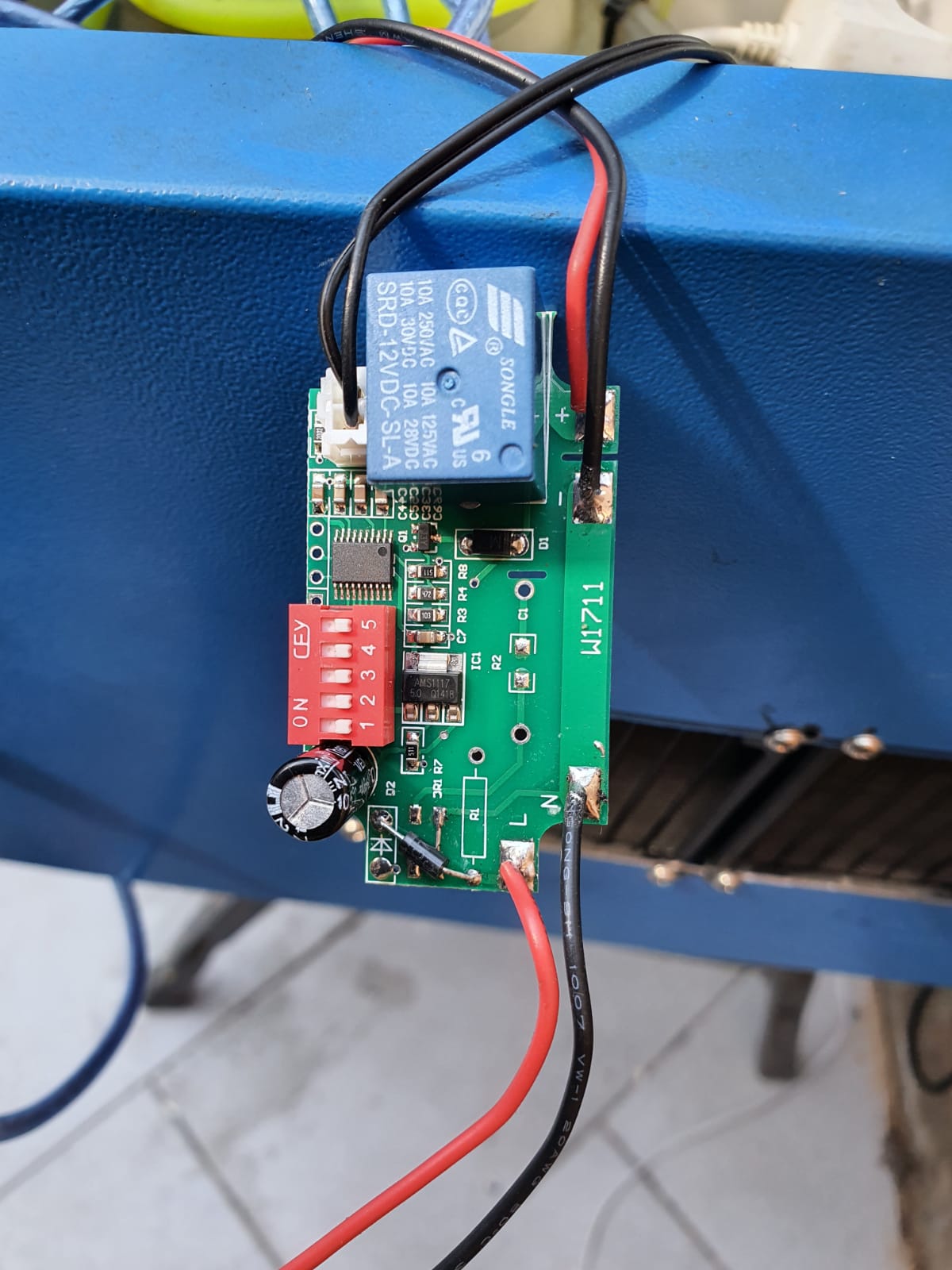
The thermostatic control of the coolant pump, taken out of its case to set the working temperatures
My solution for the cutting bed was to use an old footboard maze and I welded 4 nuts in it with long bolts that act as feet. This makes it possible to adjust the height 1x for optimum focussing the laser in the center of the to be cut material.